Problem Statement
Global carbon credit markets suffer from fragmented verification, opaque trading, and barriers for small-scale participants like farmers and cooperatives. Centralized systems breed errors, disputes, and high intermediary costs, while rural communities worldwide struggle to monetize sequestration from afforestation or regenerative agriculture. Initially piloted with Maharashtra Pollution Control Board (MPBCDC), the Carbon Bank is built as a scalable, global platform to tokenize, verify, and trade credits across voluntary and regulated markets without borders.

The platform supports three global personas:
Sellers (farmers, cooperatives, developers): Register projects, submit docs, tokenize verified credits, and list for sale.
Buyers (corporates, NGOs, governments): Search verified credits, buy via wallets, track custody for ESG/compliance.
Verifiers (VVBs/auditors): Review, approve/reject with comments, ensure ongoing compliance.
Flows cover registration (org details, registries, proofs), VVB and Registry Approvals, credits minting, buying, selling and retiring credits.
Information Architecture
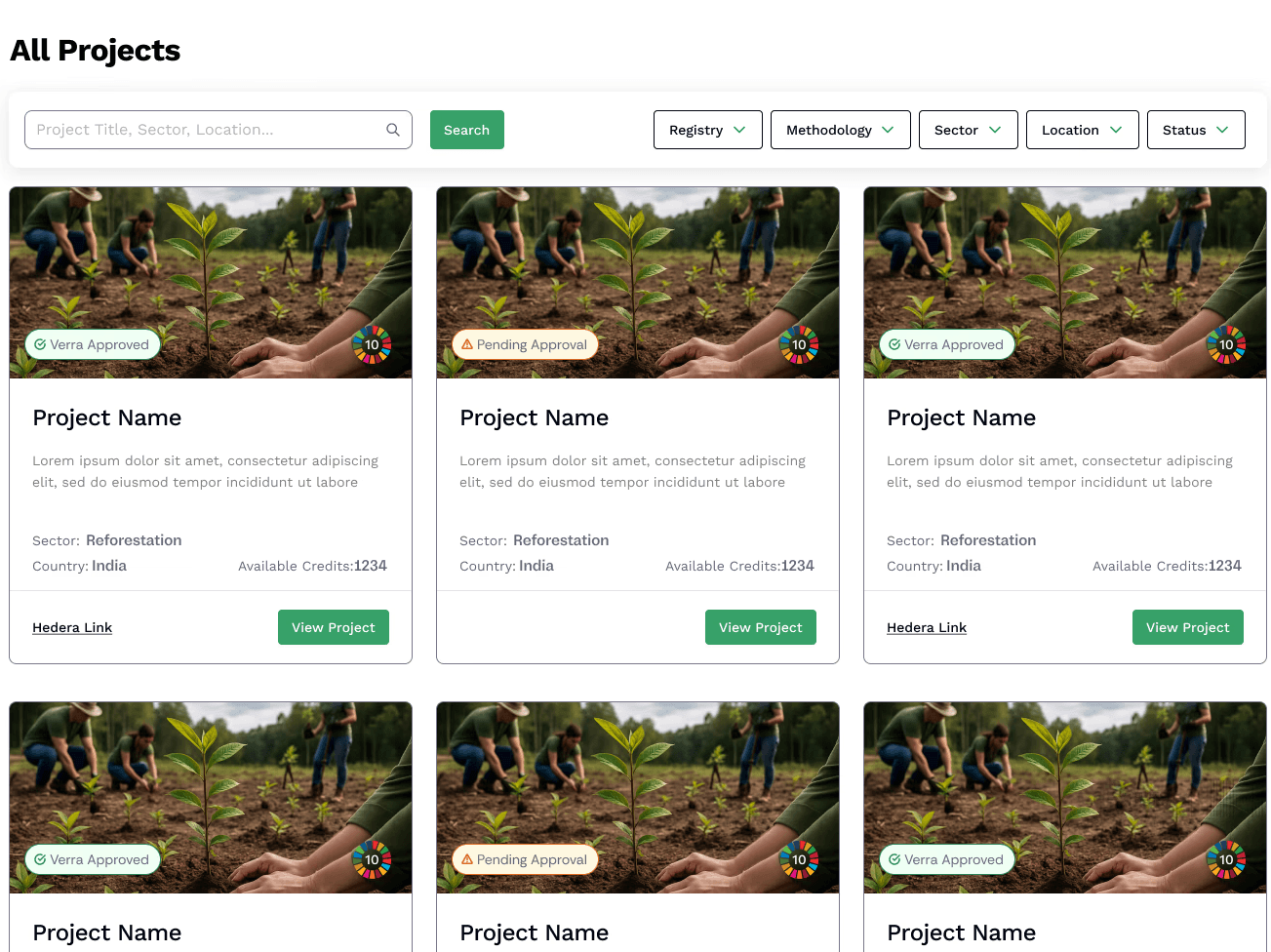
The platform was organized into six primary areas:
Dashboard
Marketplace
Portfolio
Projects
Transactions
Profile & Settings
This structure allows users to move naturally from discovering credits to purchasing, managing, and reporting them.
User Journey
Buy Carbon Credits
Sign Up -> Complete KYC -> Browse Marketplace -> Compare Projects -> Review Verification -> Purchase Credits -> Store in Portfolio -> Retire Credits -> Generate ESG Reports
The journey minimizes unnecessary friction while maintaining regulatory requirements.

Design Outcomes
The final platform successfully transforms a traditionally complex carbon trading process into an intuitive digital experience.
The design enables organizations to:
Discover verified carbon projects
Purchase credits confidently
Track sustainability investments
Manage portfolios efficiently
Generate transparent ESG reporting
Build trust through verifiable blockchain-backed records
Key Learnings
Designing EcoGuard highlighted an important lesson:
Sustainability products shouldn't feel complicated simply because the industry is complex.
By combining familiar financial UX patterns with transparent information architecture, it is possible to make carbon markets accessible to both experienced traders and first-time enterprise buyers.
The result is a platform that balances enterprise-grade functionality with a clean, approachable user experience while promoting greater trust and participation in global carbon markets.